Blog
29 Million Seniors Are Skipping This Season’s Flu Shot
Read More
Blog

New Fraym data examining whether older Americans intend to get vaccinated against RSV, influenza, and shingles points to a more actionable predictor than politics: their media and information diet. A narrow news diet and deep distrust of mainstream media strongly predict hardened vaccine resistance, independent of party identification, age, education, gender, and race. But the persuadable middle—far larger than the hardened skeptics—carries no such signature, offering public health communicators a clear, compliant path to increase uptake.
People often explain vaccine resistance with a single word: politics. Like so many other things these days. Red places resist, blue places comply, and the hesitancy map looks like the electoral map with a fresh coat of paint. That’s what many people assume. But new Fraym data examining whether older Americans intend to get vaccinated against three diseases points to a more actionable predictor: their media and information diet.
RSV, influenza, and shingles all put seniors in the hospital, and safe vaccines exist for each. Yet a hardened minority refuses to get vaccinated. About 1 in 4 adults aged 60 and older say they will “definitely not” get the RSV vaccine, with the figure at 21 percent for flu (60+ cohort) and 31 percent for shingles (50+ cohort).
That’s a lot of seniors. So, what predicts whether someone is a hardened skeptic?
We wanted an answer, so we modeled it. In the regression model, we controlled for political identity—MAGA versus traditional Republican, progressive versus mainstream Democrat—and support for the Make America Healthy Again (MAHA) movement. In addition, we added age, education, gender, and race as additional controls. Then we asked what still predicts a hardened “no.”
Several features of a person’s media environment predict hardened refusal, surviving every political control we threw at them. A narrow news diet (typically fewer than three sources) and deep distrust of mainstream media strongly and consistently predict hardened vaccine resistance across all three diseases. Getting news primarily from social media predicts additional resistance for RSV and flu, though its effect on shingles is negligible.
These are not stand-ins for ideology. Two seniors of the same political party and the same age, one of them on a narrow and distrustful media diet, sit far apart on whether they plan to get vaccinated against RSV, the flu, and shingles. The model also reveals some intriguing demographic nuances. As seniors age, their resistance actually drops. In fact, the oldest seniors are noticeably less hardened against the RSV and flu shots than those in their early 60s. Meanwhile, strong support for the Make America Healthy Again (MAHA) movement predicts significant flu vaccine refusal, but shows no statistical relationship with RSV or shingles.
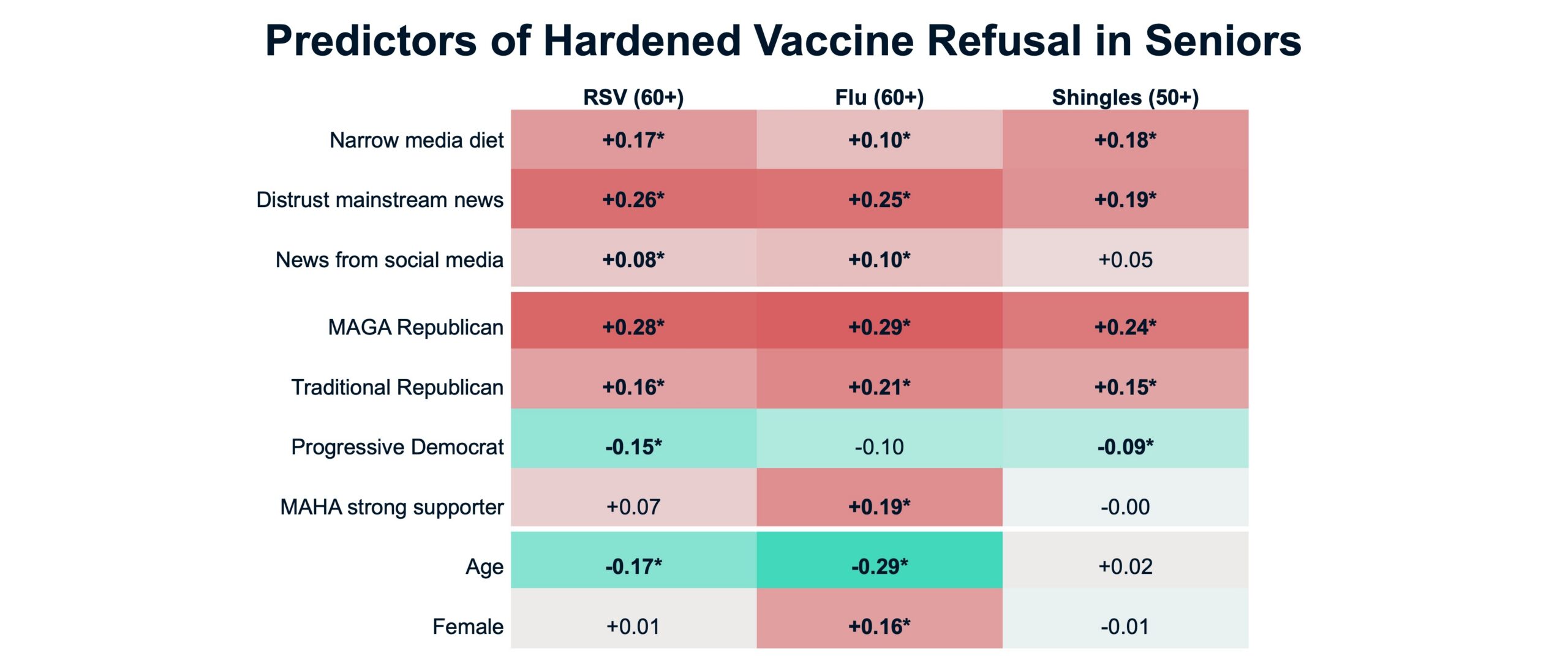
Source: Fraym data (July 2026) and analysis. The table presents standardized log-odds from a single model per vaccine, net of party identification (MAGA, traditional Republican, progressive Democrat, mainstream Democrat), MAHA support, age, education, gender, and race. Red shades indicate higher refusal; teal shades indicate lower refusal; darker shades mean stronger effects. Bold with * denotes significance at p<0.05.
For readers who prefer the underlying numbers: standardized log-odds by predictor and vaccine, net of the full control set described above. Bold with * denotes significance at p<0.05.
| Predictor | RSV (60+) | Flu (60+) | Shingles (50+) |
|---|---|---|---|
| Narrow media diet | +0.17* | +0.10* | +0.18* |
| Distrust mainstream news | +0.26* | +0.25* | +0.19* |
| News from social media | +0.08* | +0.10* | +0.05 |
| MAGA Republican | +0.28* | +0.29* | +0.24* |
| Traditional Republican | +0.16* | +0.21* | +0.15* |
| Progressive Democrat | -0.15* | -0.10 | -0.09* |
| MAHA strong supporter | +0.07 | +0.19* | -0.00 |
| Age | -0.17* | -0.29* | +0.02 |
| Female | +0.01 | +0.16* | -0.01 |
Information environments are often highly geographic, which means we can map them with precision. As a result, Fraym built a customized Information Isolation Index that captures three media-related features (narrow media diet, mainstream news distrust, and getting news from social media) down to the individual census tract nationwide. It concentrates across the rural interior, the Plains, and the Mountain West.
In practice, these high-isolation pockets likely overlap with the regional news deserts spreading across rural America. As local newspapers shutter and regional reporting fades, residents lean more on national digital algorithms, private social media groups, and narrow cable channels. Those conditions can reinforce echo chambers where mainstream health guidance rarely lands without immediate skepticism. Because these dynamics are rooted in hyper-local media environments rather than party platforms, measuring them at the census-tract level reveals where resistance actually lives, not where the electoral map suggests it should.
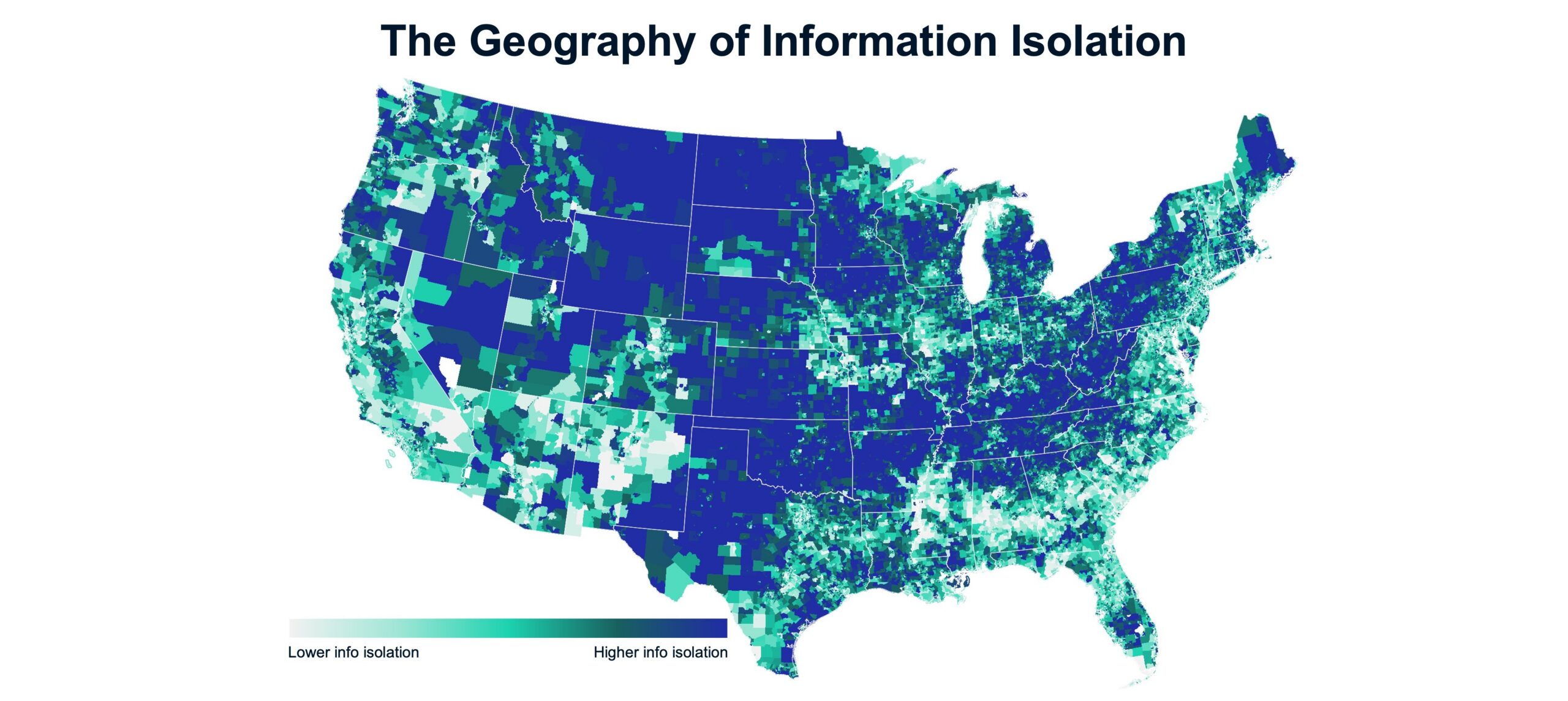
Source: Fraym data (July 2026) and analysis. The census tract-level map shows the Information Isolation Index, which measures how narrow a person’s news-outlet consumption is, how much they distrust mainstream media, and how much they rely on social media for news.
Now the more encouraging part. The seniors who say they will “probably not” get vaccinated (i.e., the soft “no”) look just like everyone else. They carry no distinct political or information diet signature at all. They are not entrenched. In other words, they are simply undecided. And they are not a rounding error. Together with the “probably will” and unsure seniors, the persuadable middle on RSV runs from roughly 45 to 76 percent of older adults from one census tract to the next.
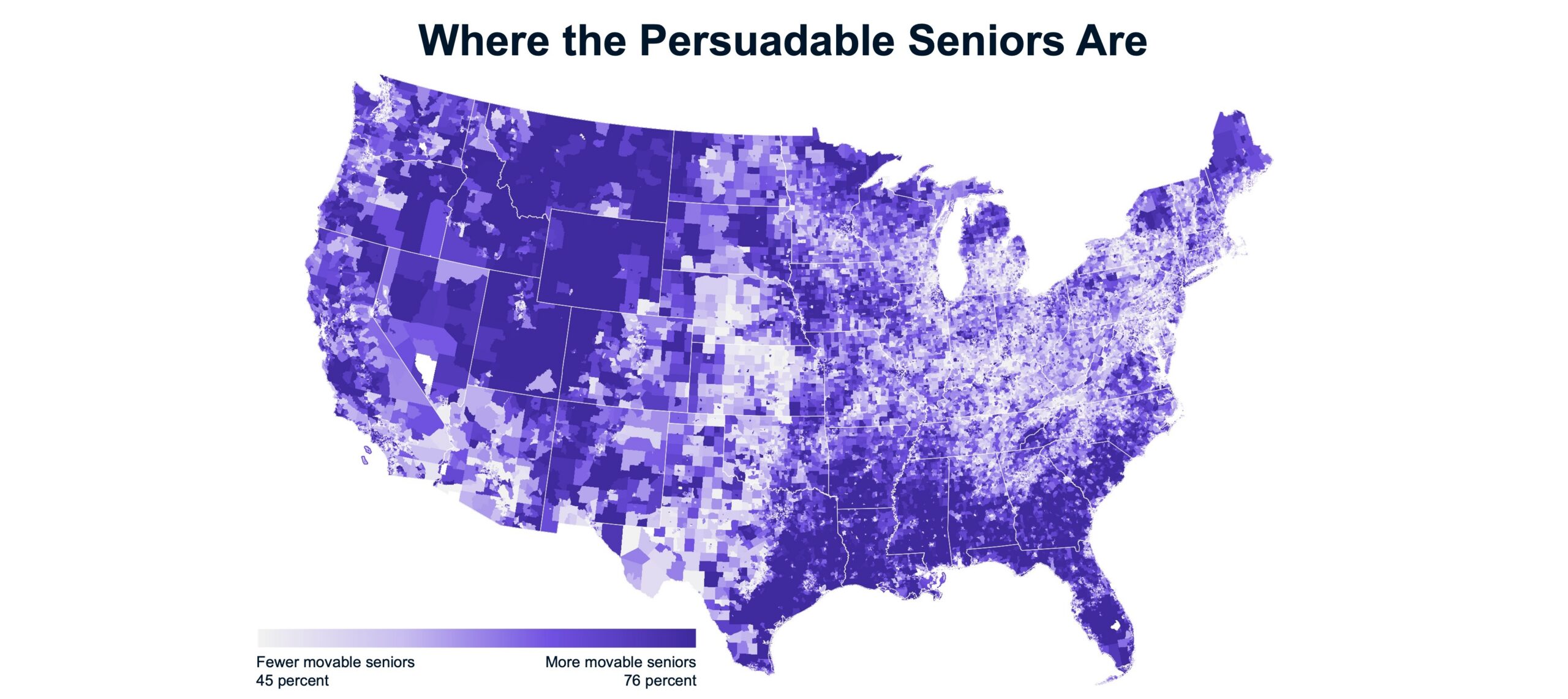
Source: Fraym data (July 2026) and analysis. The census tract-level map displays the share of adults 60+ who responded that they “probably will,” “probably will not,” or “do not yet know” whether they will get the RSV vaccine in the next 12 months.
Two implications follow, and they pull in different directions. You cannot fact-check someone out of a narrow, distrustful information diet. The hardened skeptics are reachable, but only through trusted messengers who already live inside their information world. The large persuadable middle, however, is a different job—this segment is more reachable through broad, mainstream outreach.
“You cannot fact-check someone out of a narrow, distrustful information diet. The hardened skeptics are reachable, but only through messengers who already live inside their information world.”
Ben Leo, Fraym
For public health agencies, health systems, and communicators, this shifts the entire execution playbook. Major digital ad platforms strictly prohibit campaign targeting based on political affiliation, race, or specific medical conditions. Trying to reach vaccine-hesitant seniors through these tags is both ineffective and non-compliant. Fortunately, geographic targeting based on information isolation solves this problem. Because these media diets cluster so tightly by neighborhood, campaigns can geofence high-isolation neighborhoods to deploy trusted local voices, such as community pharmacists, local doctors, or faith leaders, through hyper-local channels. Meanwhile, broader mainstream messaging can be reserved for the persuadable middle across wider media markets.
Resistance, though, is only half the story. Plenty of seniors want these vaccines but aren’t getting them. In my next piece, I’ll explore where latent demand is greatest, and show where the willing may be being left behind.
Leo, B. (2026). A Senior’s Media Diet Predicts Vaccine Resistance As Much As Their Politics. Arlington, VA: Fraym.
For questions or additional information, please contact:
Ben Leo
Title: Executive Vice Chairman & Co-Founder
Email: [email protected]
All figures, charts, and maps in this post are drawn from Fraym data and analysis (July 2026).
About 1 in 4 adults aged 60 and older say they will “definitely not” get the RSV vaccine. By comparison, the figure is 21 percent for the flu vaccine (60+ cohort) and 31 percent for the shingles vaccine (50+ cohort).
No. Fraym’s regression analysis found that a senior’s media diet—how narrow their news sources are and how much they distrust mainstream media—predicts hardened vaccine refusal even after controlling for party identification (MAGA Republican, traditional Republican, progressive Democrat), MAHA support, age, education, gender, and race.
It’s a Fraym-built measure that combines three factors—a narrow media diet, distrust of mainstream news, and reliance on social media for news—into a single score calculated down to the individual census tract, showing precisely where information isolation concentrates most heavily (currently the rural interior, the Plains, and the Mountain West).
Seniors who say they’ll “probably not,” “probably will,” or are unsure about the RSV vaccine make up roughly 45 to 76 percent of older adults, depending on the census tract—far larger than the hardened-refusal group, and they carry no distinct political or media signature.