Blog
Community Matters: Strategic Approaches to Addressing Gender Norms

Read More

Photo: Speaking at the International Conference on Family Planning (2025).
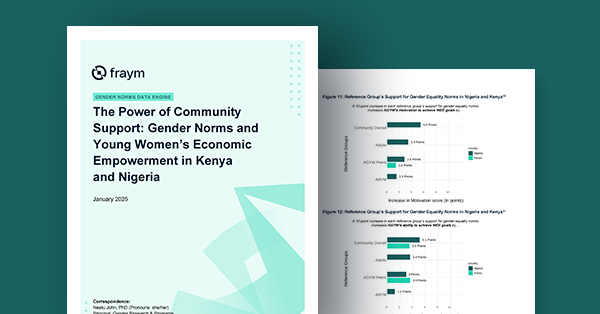
At the International Conference on Family Planning in Bogotá last week, our team presented new evidence on how gender norms shape young people’s sexual and reproductive health across Africa — revealing where and for whom these constraints are strongest, and how strategic investments can expand agency and choice.
This work feels especially urgent now, as progress toward equitable SRH access faces new pressures globally.
Using Fraym’s high-frequency, spatially disaggregated data across Nigeria and Kenya, we moved the field from asking whether norms matter to understanding which norms, where geographically, and for whom — down to the ward level.
The takeaway: Gender norms do not operate the same everywhere. Their influence varies by place, gender, and outcome — which means programming must start with diagnosis, not assumptions.
In some settings, like northern Nigeria, norms are deeply embedded and must be addressed directly. In others, like parts of Kenya, expanding access and opportunity may be more critical, with targeted norm interventions for specific relational contexts.
Access our presentations:
As the global SRH community navigates uncertainty, this work matters more than ever. We remain committed to generating the high-resolution, actionable evidence needed to direct resources where they can most expand young people’s choices and opportunities across the globe.
To learn more about the Data Engine or to continue the conversation, feel free to contact me at [email protected].
—
Dr. Neetu John (She/her)
Principal, Gender Research & Programs, Fraym