Blog
Unlocking HPV Vaccine Uptake

Read More
Blog

When a young woman considers whether to pursue schooling, delay marriage, or seek healthcare, her decision is rarely hers alone. The expectations of those around her — peers, family members, and community leaders — shape her choices just as powerfully as her own beliefs.
In our last blog, we explored how young women’s perceptions of gender norms shape their agency, health, and relationships. Here, we expand the lens: to understand outcomes more fully, we must also examine the community reference groups that set the broader expectations young women navigate.
Our analysis shows that in Nigeria, collective community reference group norms are especially powerful. In many cases, they matter even more than what young women themselves believe. In Kenya, individual perceptions dominate but community reference groups still play a decisive role in certain outcomes.
The message is clear: to drive lasting change, we must design for communities, not just individuals.
Not all reference groups carry equal weight. As seen in Figure 1, in Nigeria, broader community norms, followed closely by peer norms, are strongly associated with outcomes in sexual and reproductive health, economic empowerment, prevention of child marriage, and gender-based violence. In Kenya, young women’s own perceptions exert broader influence, but peer norms still tip the balance in key areas. These patterns show that reference groups can amplify or constrain young women’s choices depending on context.
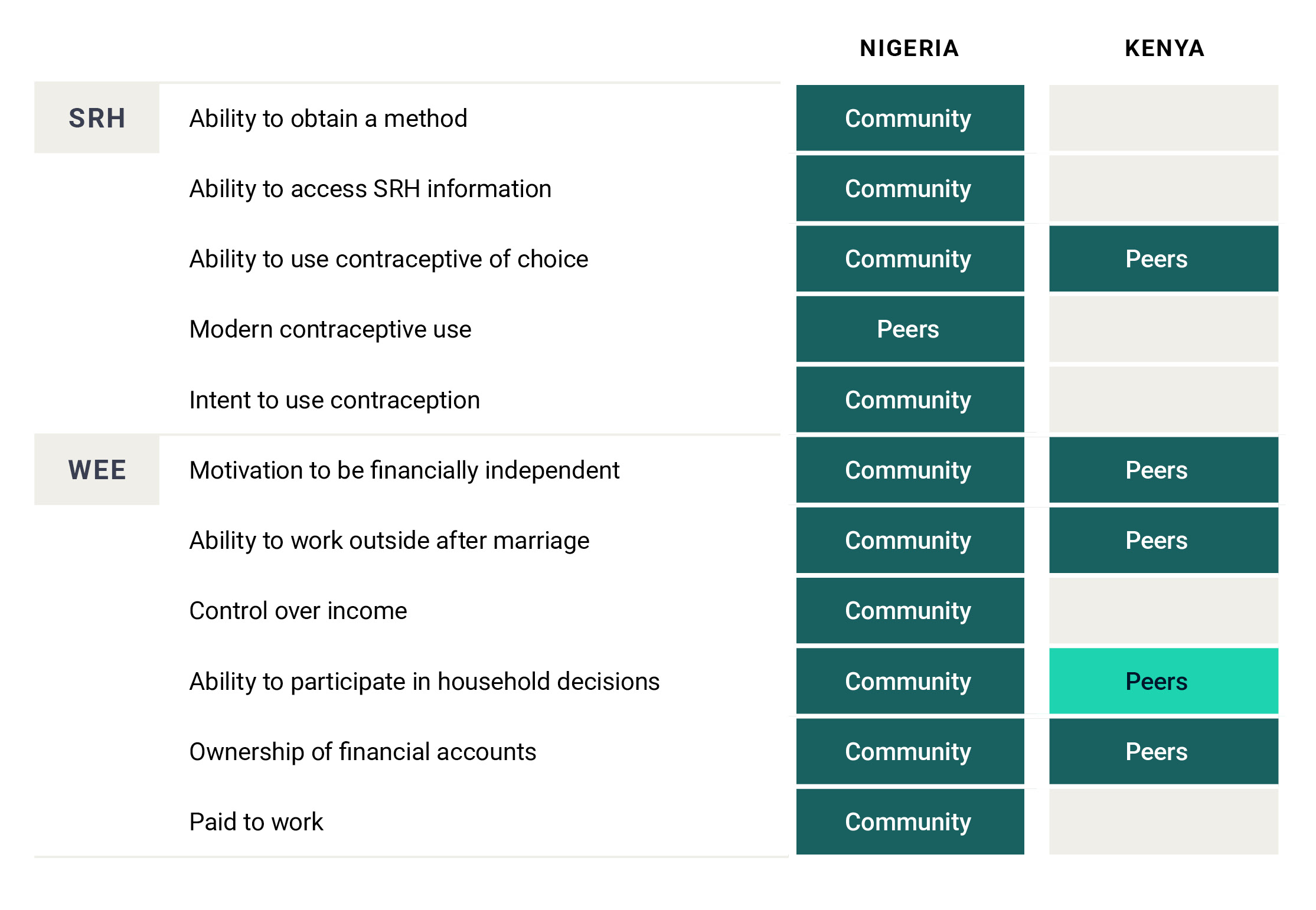
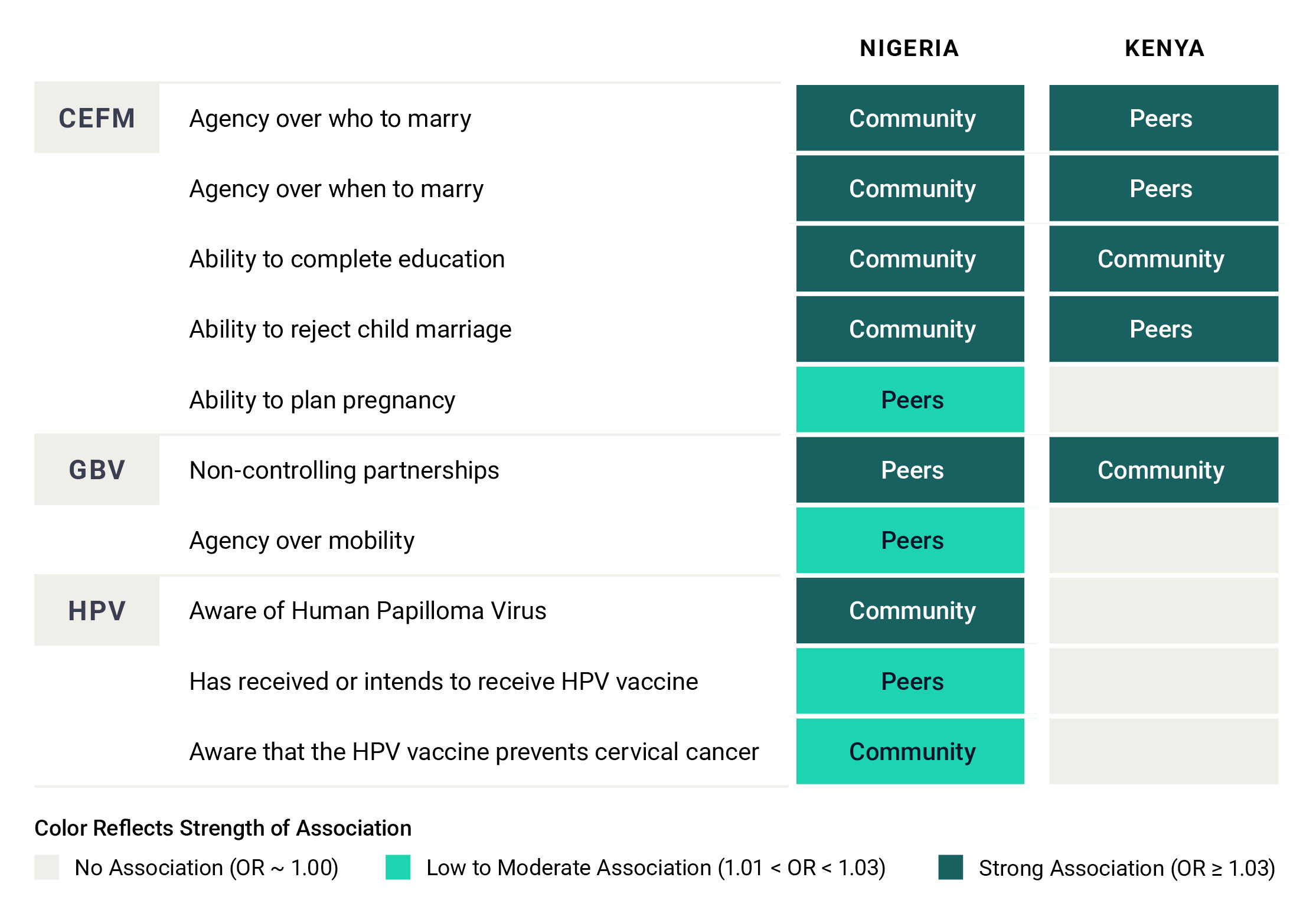
Note: Most significant norms are shown. Norms considered include G-NORM scale, WEE scale, and HPV related norms on access to SRH education and health services.
Implication
Designing for influence starts with knowing whose norms matter most. High-resolution data identifies when peers, community members, or households are the key reference group – allowing more targeted engagement strategies.Design Implication 2: Engage Trusted Messengers
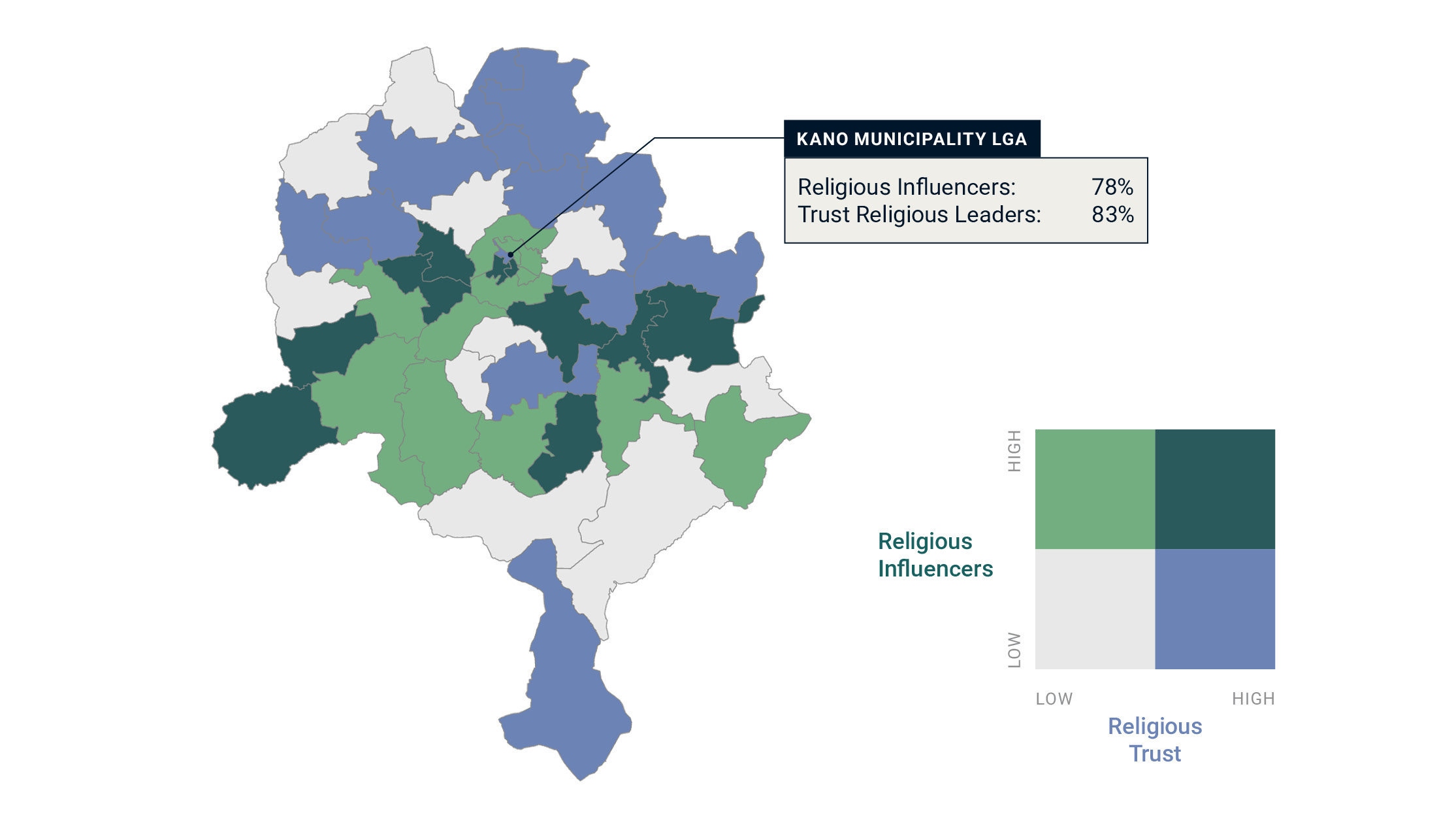
Once we know whose norms matter, the next step is to identify who can influence them. In Nigeria, religion plays a central role in community life. Religious leaders are not only trusted but often positioned to influence deeply held expectations. Yet trust and influence are not uniform—our data shows important regional differences. In Kano State, for example, high-resolution data pinpoints specific localities where religious leaders are both highly trusted and viewed as influential on gender issues. This is denoted by the dark green LGAs in Figure 2. These are places where religious leaders can be especially effective in reshaping norms around marriage, gender roles, and women’s empowerment.
Implication
Where religious leaders are both trusted and influential, they can act as powerful agents of normative change. High-resolution data can help identify where to engage key influencers, enabling localized and context-sensitive engagement strategies.
Identifying the right messengers is only half the equation. We must also know how to reach them. Media use is tightly linked to support for gender equity, and the patterns are revealing. As shown in Figure 3, communities with stronger gender-equitable norms engage more with digital platforms, especially internet and television. In communities with weaker support for gender equity, traditional media such as radio remains most influential. These dynamics show that the medium itself reflects and reinforces the normative environment.
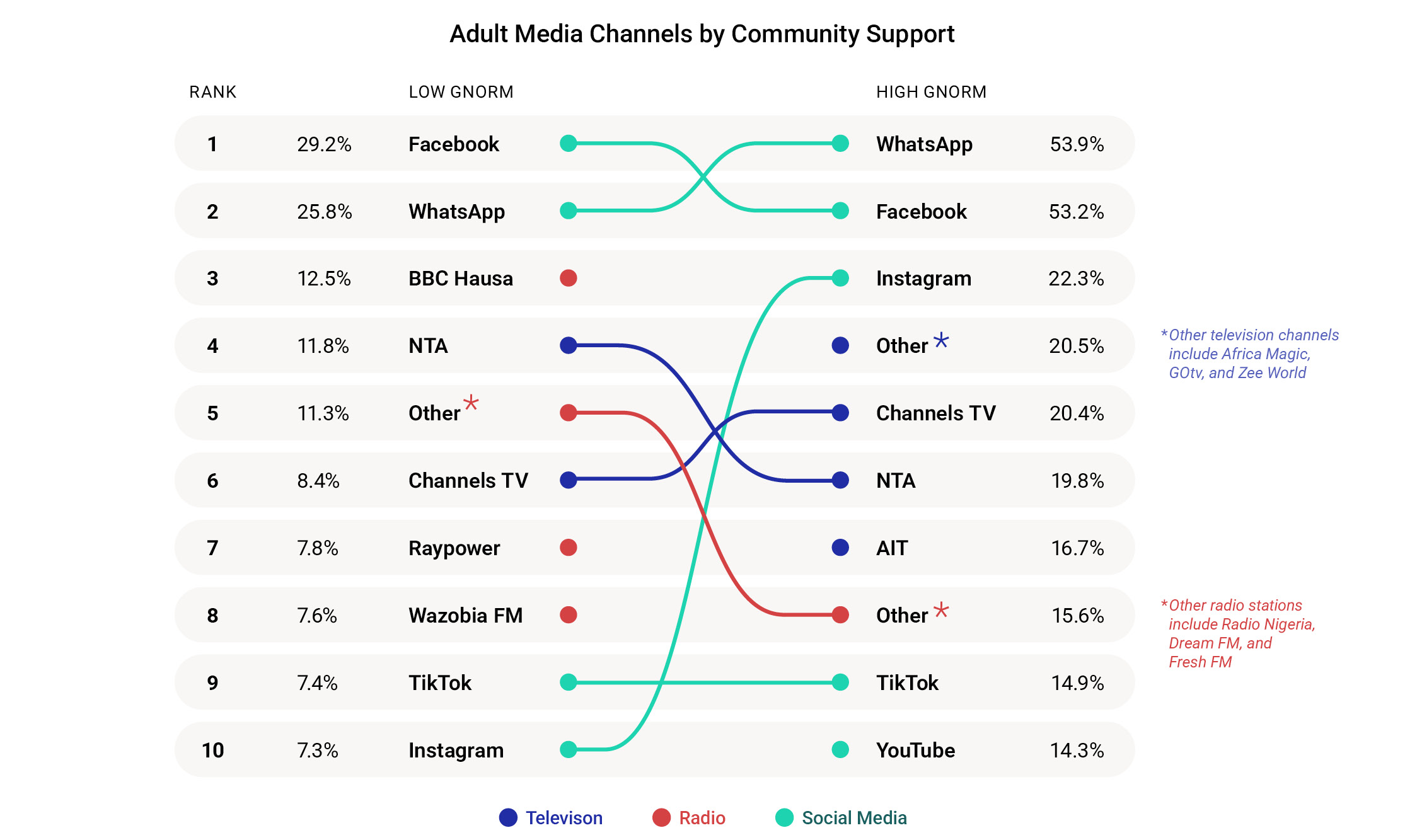
Note: Communities are classified as “high” G-NORM if their scores > the population-weighted mean, and “low” otherwise.
Implication
In high-equity communities, digital channels can scale influence fast. In low-equity areas, analog tools like radio and local champions remain essential. Norm-linked media insights help tailor delivery to the lived communication landscape.
Community reference group norms are not peripheral — they are central to whether young women can seek, access, and benefit from programs. To design effectively, we need to make these dynamics visible and measurable.
Three lessons emerge:
1. Measure community norms at scale. We cannot design for what we don’t understand. Efficient, validated tools are critical.
2. Design contextually. Strategies must be tailored to reference groups, geographic environments, and communication channels.
3. Build systems for sustained change. One-off efforts aren’t enough. We need granular, frequent, population-level data to monitor, compare, and adapt in real time.
This is why we are building the Fraym Data Engine: to create a gender-centered data system that supports ongoing learning, responsive design, and equity-driven transformation.
At the heart of every community is not only what individuals believe, but what they collectively expect. By identifying and adjusting those expectations, we can open new pathways for young women to thrive.
For questions or additional information, please contact:
Neetu John, PhD (Pronouns: she/her)
Principal, Gender Research & Programs
Email: [email protected]